Analysis
The literature matrix, coding and the synthesis map.
Videos

Guides
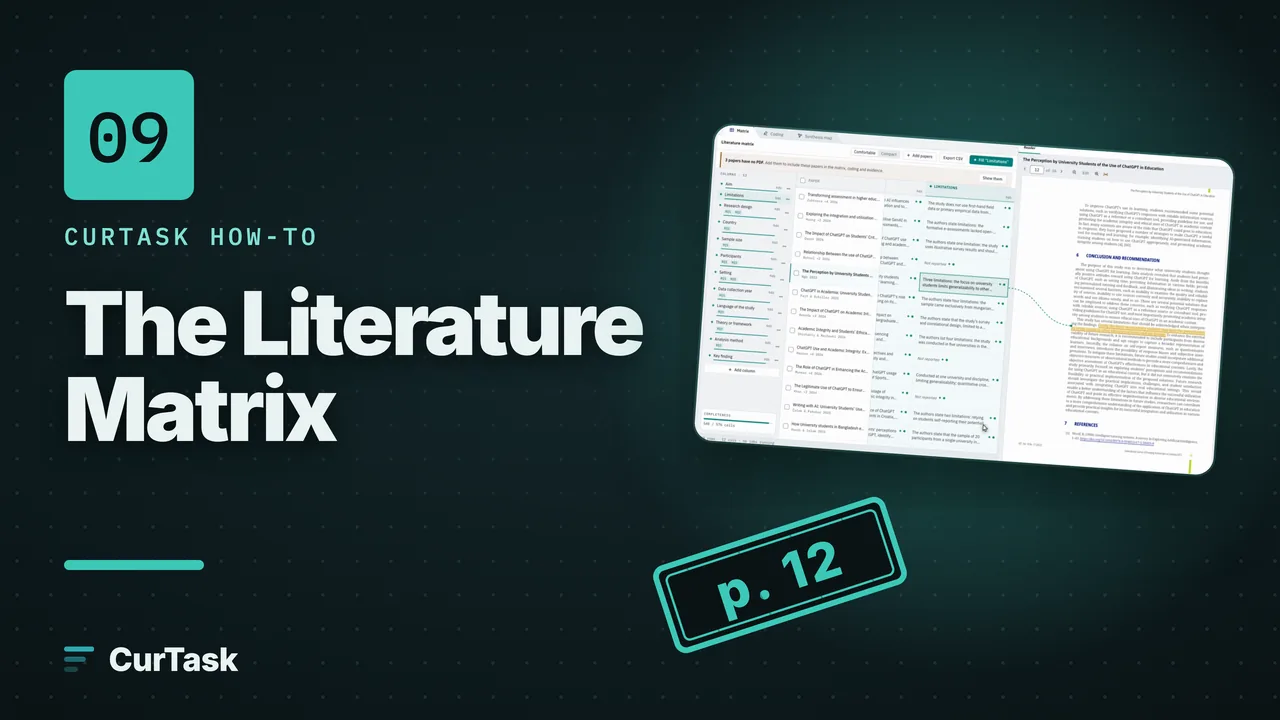
- Step by stepBuild a literature matrixAdd a column, see what filling it costs, check a preview on 3 papers, then fill it and review the answers.
- Step by stepWrite your own matrix columnAsk any question of every paper in your own words, and choose the kind of answer you want back.
- Step by stepAccept, edit or regenerate a valueCheck a value's quote in the reader, then accept it, change it, ask again, or bring back an earlier value.
- Step by stepChange a column and refresh outdated cellsRename or reword a column's question, then redo only the cells made for the earlier version.
- Step by stepExport your matrixDownload your literature matrix as a CSV file to open in Excel, Google Sheets or any spreadsheet.
- Step by stepCode your papers by handSelect a passage, give it a code, and watch your codebook and coding strips grow.
- Step by stepBuild and tidy your codebookAdd codes and child codes, choose colours, write definitions and memos, and merge or split codes as your analysis matures.
- Step by stepSuggest codes with AI (paid plans)Get Suggested passages for one paper, apply one code across your papers, or code every paper at once, then review each suggestion.
- Step by stepBring a paper's codes from another projectWhen a paper you coded in one project joins another, choose to bring all its codes, some of them, or none.
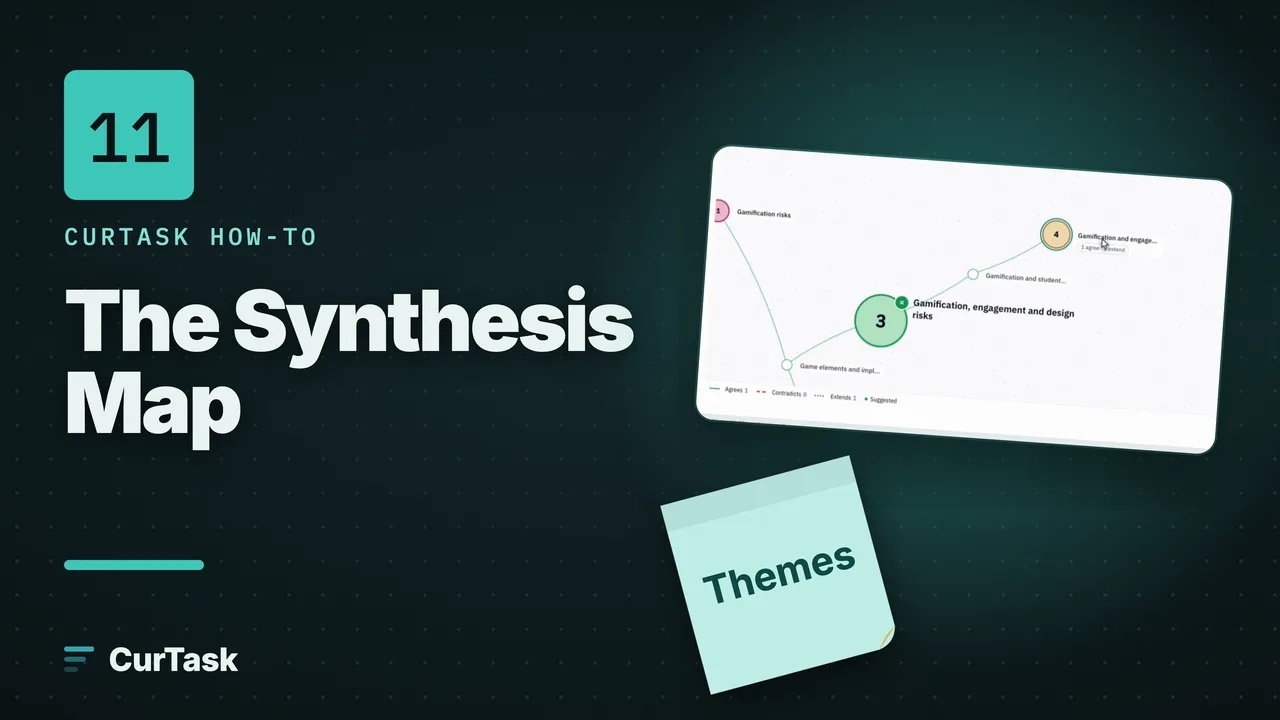
- Step by stepFrom codes to themes on the Synthesis MapSort your codes into categories on the Board, group them into bigger ones, and turn the top ones into themes written as sentences.
- Step by stepLink quotes in the theme grid and see the mind mapPick a quote, then a quote from another paper, say whether they agree, contradict or extend, and explore the links on the Map.
- Step by stepSuggest categories and Link all with AIOn paid plans, let AI propose categories, themes and links on the Synthesis Map, then accept only the ones you agree with.
- Step by stepSend a theme to WritingTurn a theme into a new section of your manuscript, with an outline of its evidence attached, at no cost.
Concepts
- ConceptReading a matrix cell: values, quotes and statesWhat Suggested, Accepted, Edited by you, No source found, Not reported, Check this one and Outdated mean in your literature matrix.
- ConceptShared facts: short facts reused for the same paperHow a checked sample size or year from the same paper can fill your matrix cell at 0 credits, but only after its passage is found again in your own PDF.
- ConceptCoding stripsThe coloured bars beside a paper that show every coded passage, where codes overlap, and the edge markers that jump to the next coded passage.
- ConceptMemos and notes are never sent to AIWhat stays with you only, and exactly what is sent when you ask for help with coding.
- ConceptAgree, contradict, extend: linking what papers sayWhat the three kinds of link on the Synthesis Map mean, where you see them, and how they carry into your writing.